
Gluten Science – lets delve into what is gluten and why it causes problems.
As the number of people who suffer from a gluten-related issue increases globally, the specifics of this pesky, complex protein are becoming valuable to be informed about.
So what is gluten?
Gluten is a family of proteins found in grains such as wheat, rye, barley and spelt. A protein is a large, complex molecule comprised of long chains of amino acids- there are 20 different types of amino acids that can be combined to make a protein.
Chains of amino acids can be divided into smaller fragments called peptides, which consist of two or more linked amino acids. The two main proteins in gluten are gliadin, which is a prolactin protein, and glutenin, which is a glutenin protein.
How does gluten cause problems?
As identified by Glutagen’s lead researcher Cornell in 1993, gliadin is the trigger of the pathophysiological processes that result in the disruptive symptoms of a range of gluten-related conditions.
As shown in a 2011 study, different fragments of gliadin are responsible for different types of activity, and this is represented by the different colours in the diagram below:
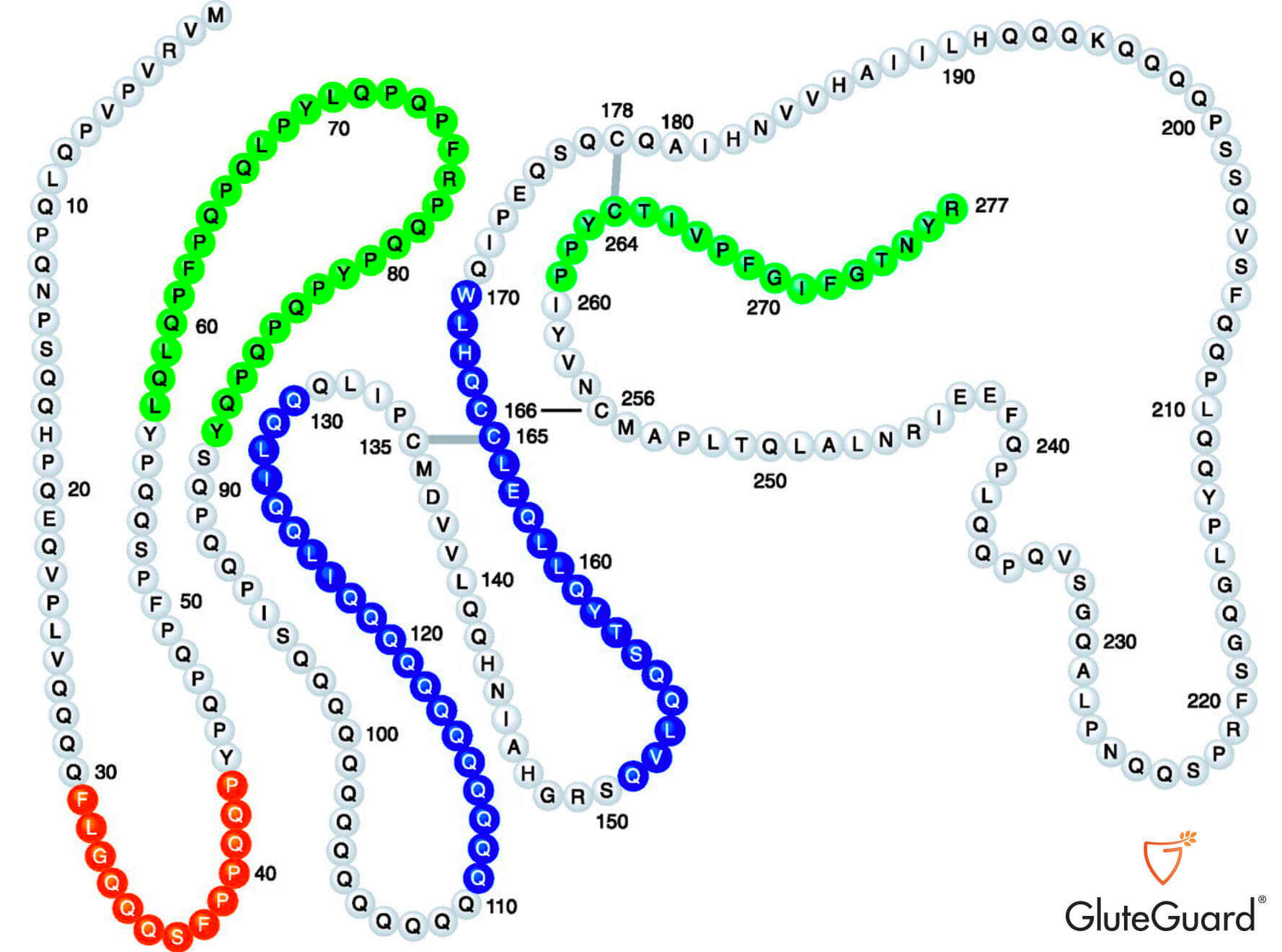
Alessio Fasano (2011) Figure 1- Gliadin motifs. Mapping of α-gliadin motifs exerting:
- cytotoxic activity (red)
- immunomodulatory activity (light green)
- zonulin release and gut-permeating activity (blue)
- CXCR3-IL-8 release in CD patients (dark green).
By far the most toxic fraction in the 53-amino acid sequence of gliadin is called Fraction 9, which has been shown to be unable to be digested by the intestinal mucosa of gluten-sensitive individuals. Usually, proteins are broken down into single amino acids that can be then utilised by the body- this breakdown is facilitated by digestive enzymes. However, in the case of gluten sensitive individuals, the body does not produce the enzymes to fully break down the amino acid chains, resulting in a group of gliadin peptides that are unable to be digested any further- as demonstrated in the diagram below.
A-Gliadin Peptides (Synthetic) for which there is in vivo evidence of activity in gluten sensitivity
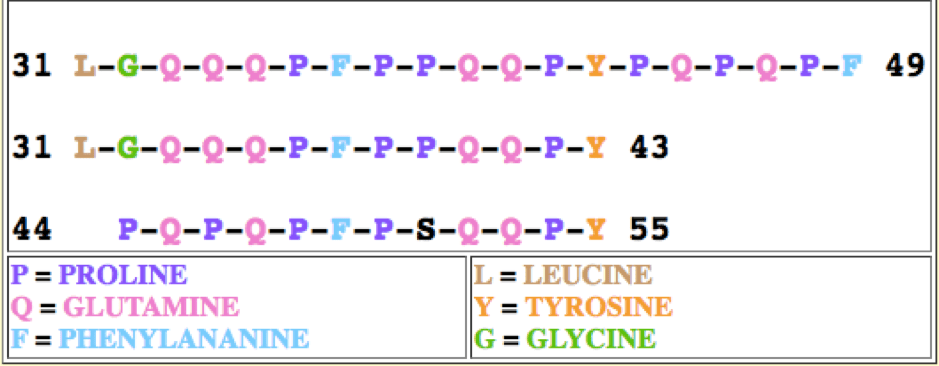
It is these peptides that cause problems, as they are eventually absorbed by the gut cell barrier and are able to trigger symptoms of gluten sensitivity such as nausea, bloating and headaches.
A protein as abundant as gluten provides opportunity for its inadvertent exposure and thus individuals may benefit from the protection of an enzyme supplement such as GluteGuard. Recently developed, Gluteguard is a locally developed papaya fruit extract with a unique ability to specifically target toxic gluten peptides. In comparison to other products on the market papaya enzymes break down the entire gluten protein where others may only degrade the ends. This is owing to the solitary active ingredient; an enzyme called Caricain which specifically breaks down protein.
Such a form of supplementation may allow individuals experiencing gluten sensitivity to go about their daily routine without fear of gluten exposure and the subsequent ill-effects. This unique enzyme may improve the digestive health of anyone on the spectrum of gluten sensitivity, while providing peace of mind when eating new products, foods prepared by different individuals or when dining out.